
See it, Embrace it, Confess it
Limited Revelation
I’ve often argued whether it would be better to have the completed word of God in your hands or to have direct communication with God like Moses or Elijah. As much as we want to have our private audience with God and hear his words to us specifically, the Bible is clearly a better choice. For one, what if you are not Moses or Elijah? God did not speak to everyone like he did to the patriarchs and to the prophets. What will you do when there is no open vision from God and his prophets are silent? When the prophets do speak from God, we can’t help but remember that people are fallible, memories play tricks on the mind over time, some would even lie to you. How precious it is to those who have free, easy access to the Bible – and what a handicap to those who don’t.
It is therefore amazing to me when a historical Biblical figure demonstrates a level of faith, endurance, and power in their lives that the modern Christian can hardly fathom with just a fraction of the word of God to guide them. David is one such character and gives us a case study for our consideration in Psalm 17.
Arise, O LORD, disappoint him, cast him down: Deliver my soul from the wicked, which is thy sword: 14 From men which are thy hand, O LORD, from men of the world, Which have their portion in this life, and whose belly thou fillest with thy hid treasure: They are full of children, And leave the rest of their substance to their babes. 15 As for me, I will behold thy face in righteousness: I shall be satisfied, when I awake, with thy likeness.
The wicked are closing in on all sides and their intent is destruction. David describes them this way:
- They are men of the world
- They have their portion in this life
- Their bellies are filled with hid treasure
- They are full of children
- They leave the rest of their substance to their babes
Today we’d save some time and call them “rich jerks”. The person that would destroy David belonged to the kingdom of this world and they were next in line for the throne. They were wealthy and ate of the hidden treasures of this world which only those most devoted to it will find. They were successful, had many children and would leave those babes a magnificent trust fund one day. Subtly though, David hints at one major flaw. They had only hope in this life and would one day leave it entirely and take nothing with them.
“As for me…” David offers in contrast, “I will behold thy face in righteousness”. What is David referring to? Of course, it’s the resurrection of God when he will awake from the sleep of the believer to a glorious life, a new body, and companionship with his creator.
This statement of David shows profound faith and a deep understanding of what is truly powerful in this world and he came to these conclusions with only a small fraction of the word of God in his hands. He didn’t even have all the Psalms yet for he was still writing them!
Notice also how David’s hope was not contingent on God actually delivering him! He didn’t say, “I will dance on the graves of my enemies…” because he had no guarantee that God would do that for him. He trusted in God, but he accepted that even if his divine help never arrived on this earth, he would awake with a new body and everlasting life with God. That’s powerful.
Could we have this same power in our life? We have far more information about the resurrection than David ever did. We have John’s account of the kingdom of God in Revelation, the many facts Jesus himself taught about heaven, and Paul’s instruction to the early churches about the next life. If knowledge is power then we should have more faith to believe God’s promises and more endurance through trials today than we ever have in the past. That’s why Paul was willing to give up everything he had for more knowledge of the power of the resurrection.
[I would count all things as loss] that I may know him, and the power of his resurrection, and the fellowship of his sufferings, being made conformable unto his death;
Equality of Opportunity, Not Outcome
We’ve all seen this very low IQ image which makes about as many bad assumptions as it does assertions. It assumes a general good-will in human nature, and asserts that we’re all victims unless someone helps us. What a mess. What this image does accurately reveal is that we are obsessed today with equal outcomes. But, this concept did not originate from scripture.
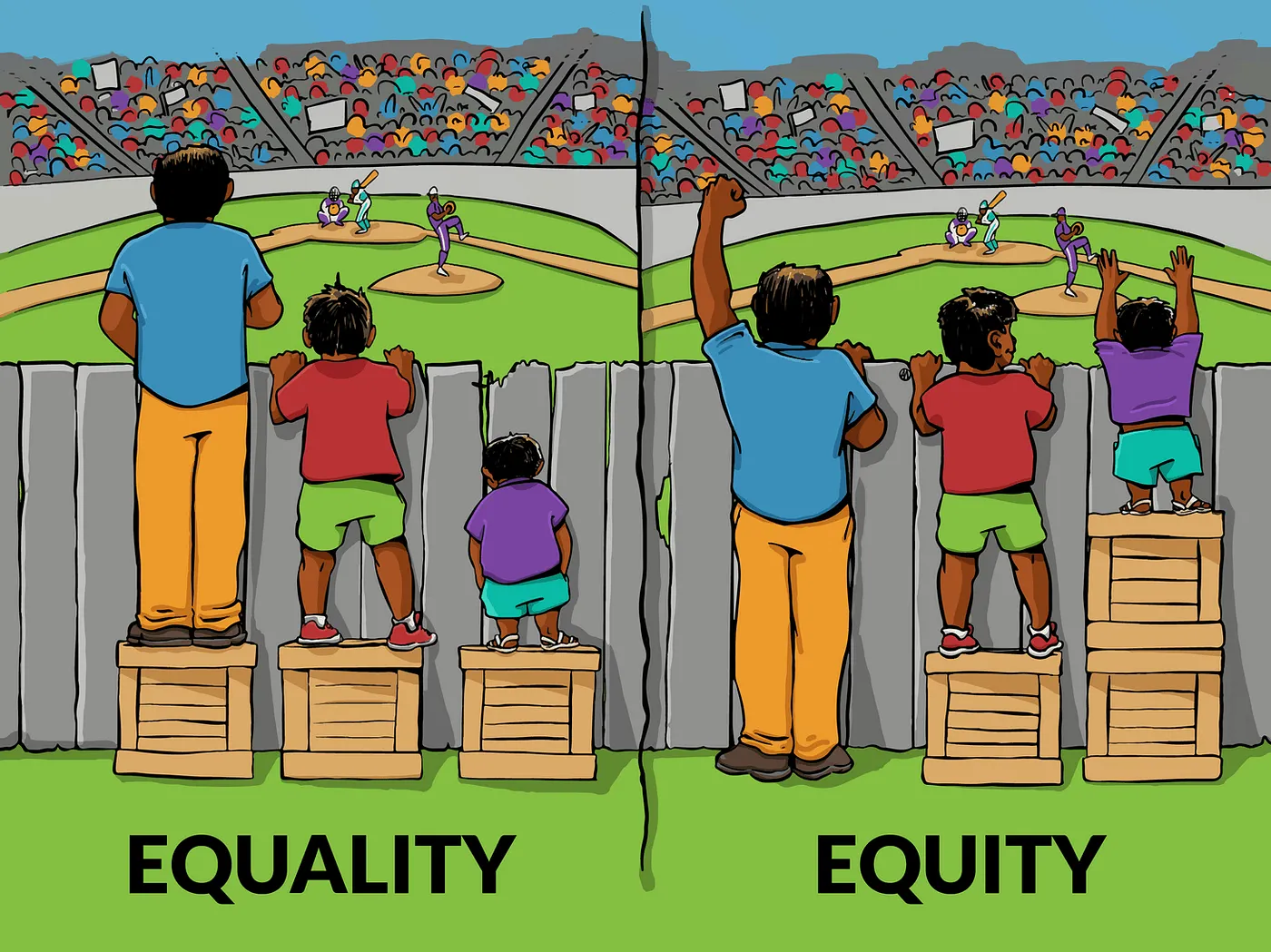 Instead, the Bible paints a very different picture especially as it relates to the resurrection. The outcome of every believer will be different and dependent on our beliefs and deeds here on earth. Paul says everyone is running the race, but only one receives the prize. His goal is not to discourage, but rather to exhort all believers to take his advice in 1 Corinthians 9:25 – strive for an incorruptible crown. Work hard to win that prize. We all can win because we are all running a different race against different opponents (Paul specifically said: “I have finished my course”). Our motivation will determine our effort and our effort determines our outcome.
Know ye not that they which run in a race run all, but one receiveth the prize? So run, that ye may obtain. v25 And every man that striveth for the mastery is temperate in all things. Now they do it to obtain a corruptible crown; but we an incorruptible.
Paul’s motivation was an incorruptible crown and the promise of a reward in the resurrection. It actually motivated him to live a better life in general. When you are training for an intense competition like the olympics, a UFC fight, or the super bowl, you must be temperate in all things. You will not be up late drinking because you are striving for the mastery. You will keep your affairs in order so that they will not become a distraction. Your diet will be regimented, you’ll work on mental toughness, and you’ll surround yourself with a team to help you succeed. You are temperate in all things.
The Christian must also view his life through this lens. You are competing in an epic spiritual fight for the ultimate prize to be granted by the omniscient judge of all things. Do you wake up each morning with this mindset? Or are you the believer who can only see these things “afar off”?
Crown of Rejoicing
Paul adds even more to chew on in 1 Thessalonians 2:19-20 when he points out that some Christians will receive a special benefit in the next life. Whether the crown he refers to is metaphorical or real, the point remains that for all whom we have suffered, labored, helped, encouraged, strengthened, and healed in the faith, we will receive a reward of hope realized and rejoicing.
Why does a mother sacrifice sleep, money, and comfort for the well being of her children? There is a satisfaction and a reward that follows from giving of yourself for someone else’s benefit. Parents long for the day when they can see their toil produce fruit in the lives of their kids. This is no different in the spiritual sense. Paul had risked his life for the Thessalonians, had nurtured them gently, and had worked tirelessly to pay for his own needs that the gospel would not be hindered. Now, as Paul begins to see the fruit from his gardening he can look forward to added joy in the resurrection at the coming of our Lord.
It follows naturally that not everyone will have this same experience in glory. There will be many believers who have helped no one and made no effort to contribute to the body of Christ. Whether this is due to their salvation late in life or continued apathy over many decades, the result is the same. What will you do with your opportunities to help fellow believers?